
Night vision technology has long been associated with military night raids, special operations units, and high-stakes missions conducted under the cover of darkness. But over the last decade, that image has shifted dramatically. Modern night-vision devices (NVDs) are now widely accessible to civilians. They’re especially useful for responsible firearm owners, landowners, and anyone who wants better situational awareness when the sun goes down.
At Makhaira Group, we help students understand this technology safely and correctly during private firearm instruction, because like any technology, getting the most out of NVDs requires practice and skill.
What is Night Vision?
Night vision technology comes in two major categories. The most common is the image-intensifier device: the green or white-phosphor tubes most people picture when they hear “night vision.” These work by taking small amounts of ambient light (moon, stars, urban glow, or infrared illumination) and amplifying it into a visible image.
Thermal imagers are the second major category. Unlike image intensifiers, thermal optics detect heat signatures. They excel at detection, but they don’t show visual detail the same way image-intensifiers do.
NVDs also come in generations, a simple way of describing technological improvement:
- Gen 1 is budget-friendly but limited in clarity and lifespan. Expect these to cost $100-500.
- Gen 2 offers stronger light amplification and better resolution. These tend to cost $500-2,500.
- Gen 3, a standard in professional and enthusiast communities, provides excellent clarity, low-light performance, and long tube life. Made for civilians and professionals, these will run anywhere from $2,500-10,000+.
For most well-informed civilian users, Gen 2 and Gen 3 devices are the practical sweet spots.
Practical Civilian Applications of Night Vision
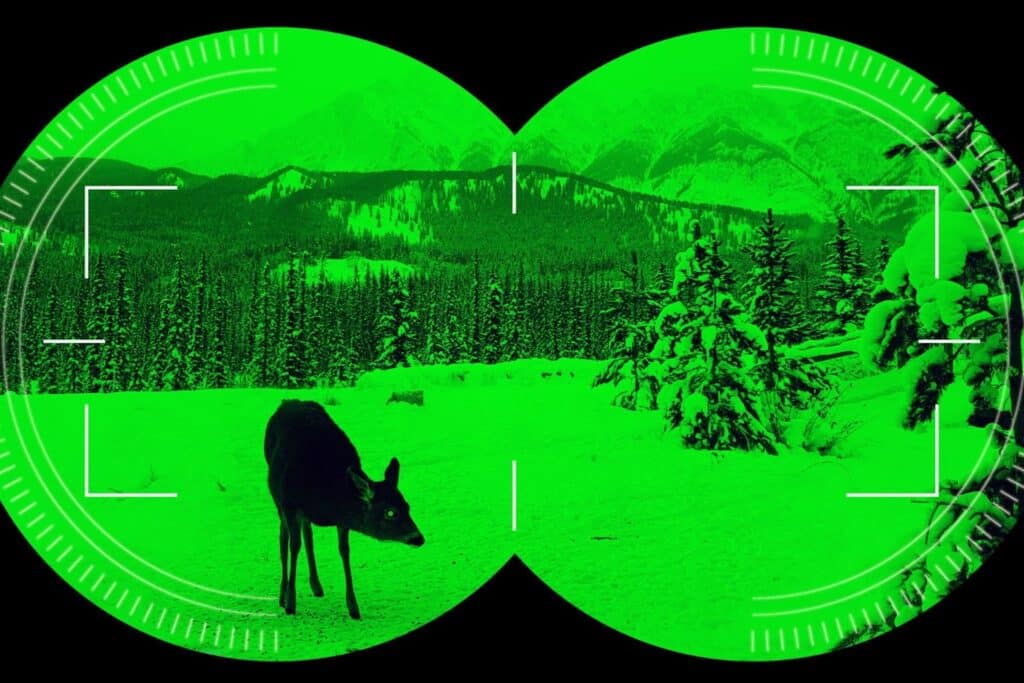
Night vision has several practical applications for civilians, including:
- Home and Property Security: Night vision can be a powerful tool for home defense, allowing homeowners to assess nighttime activity safely without bright floodlights that can obscure as much as they illuminate. They also provide a distinct edge over potential intruders—always adhere to Colorado’s Statutes on the use of force.
- Wildlife Observation and Land Management: Ranchers, hunters, and property owners use NVDs to observe wildlife, check livestock, and covertly identify disturbances.
- Low-Light Firearms Training: Whether for defensive skill-building or sporting interest, training with night vision under a qualified instructor dramatically improves confidence and competence in real low-light scenarios. (This training does not negate certain laws regarding handling firearms at night, such as hunting before dawn or after nightfall.)
- Search, Navigation, and Outdoor Safety: From locating a lost pet to avoiding trip hazards while crossing your property, NVDs allow for safe mobility and clear terrain reading when flashlights aren’t ideal.
Choosing the Right Equipment
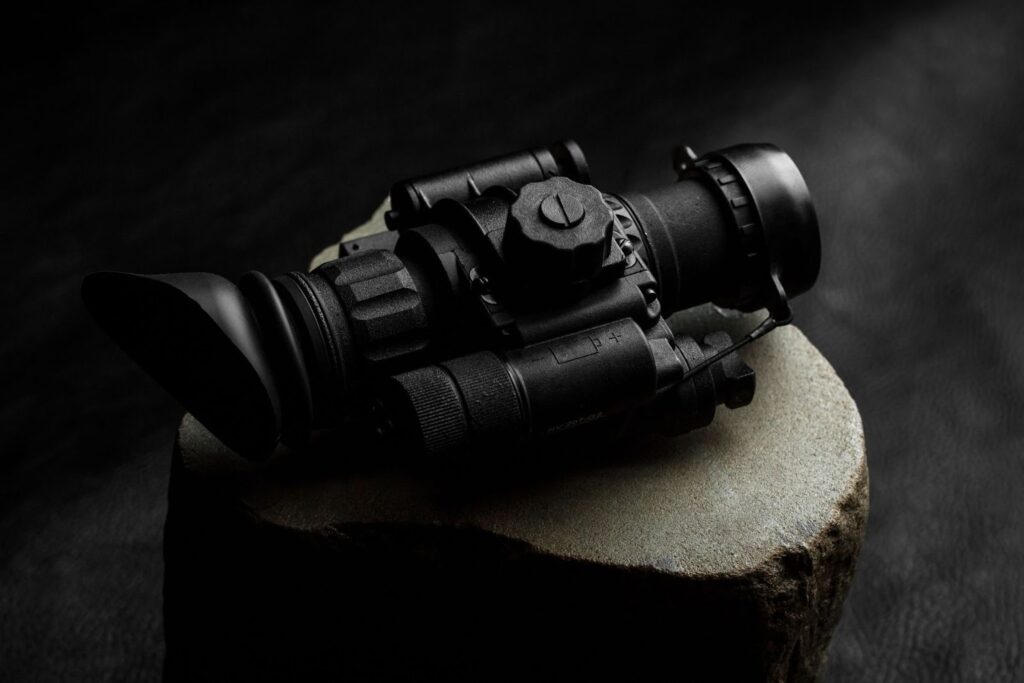
Night vision comes in a variety of setups: monoculars offer versatility and are ideal for helmet mounting. Binocular systems provide superior depth perception but come with higher costs and weight. Dedicated weapon-mounted scopes are excellent for hunting or long-range use, but they do limit mobility and must be managed carefully for safety.
You’ll also need to consider whether thermal optics or image-intensifiers are better suited for your needs. Thermal optics excel at detecting warm targets quickly, while image-intensifiers allow for positive identification. Many civilian users eventually integrate both, depending on their goals.
Finally, choosing the right helmet, mounts, IR illuminators, and laser systems is essential. Users must also decide whether they will run handheld, helmet-mounted, or weapon-mounted systems—each with unique safety and practical considerations.
Legal, Ethical, and Safety Considerations
Before purchasing or using night vision, civilians must understand local laws, including any hunting restrictions or device use regulations. Ethical considerations also matter. NVDs should never be used for harassment or surveillance of others on private property. And above all, low-light firearm work must be done under controlled conditions, ideally with professional supervision.
Applicable Colorado Laws & Regulations
- Colorado Statutes on the Use of Force
You must always follow state and federal laws regarding the use of force. Note that this may limit the use of force to within your dwelling and not across your entire property.
- Colorado Revised Statutes – Hunting with artificial light / night vision / thermal imaging
CO Rev. Stat. § 33-6-127 prohibits using electronic night-vision equipment, light-gathering optics, or thermal devices to hunt outside legal hunting hours. Violation is a misdemeanor: fine of $2,000 + 20 hunting license suspension points.
There is an exception: people who own or lease the land (or their agents) may in some cases be exempt — these are explicitly referenced in the statute. Colorado.Public.Law+1
- Colorado Parks & Wildlife (CPW) Regulations – Artificial Light Permits
Under CPW rules (Ch. 17), artificial light may be used to take certain “depredating” wildlife (e.g., coyotes, raccoons) on private land, with the landowner’s written permission.
Violating Colorado regulations is treated seriously; CPW may suspend hunting licenses or points. We recommend speaking to CPW for more information and to gain permission.
Why Training Matters — and Why Makhaira Group Helps You Succeed
Night-vision devices look easy to use until someone straps them on for the first time. Depth perception changes, movement slows, and basic tasks become surprisingly complex. Proper instruction speeds up the learning curve, ensures safety, and prevents costly equipment mistakes.
At Makhaira Group, students get hands-on night vision training with experienced instructors. Our Night Fighter classes, tailored for pistols and rifles respectively, are designed to develop advanced gun fighting skills in little-to-no light environments including: fundamentals, basic theory/technical explanation, gear set-up, use and dexterity, marksmanship, and moving while shooting individually and in a two-man team.
If you’re ready to learn how to use night vision safely and effectively, contact Makhaira Group to get started with professional instruction, gear guidance, and night-training opportunities.