
At Makhaira, we know self-defense doesn’t always involve a firearm. Effective self-defense is a layered approach built on awareness, communication, mobility, and simple, trainable skills. For many civilians, these layers are more practical and more accessible than any weapon.
At Makhaira Group, we teach students that self-defense means being aware and being prepared. Whether or not you carry a firearm, there are reliable alternatives worth learning, practicing, and integrating into your daily life.
The Foundation: Situational Awareness and Risk Avoidance
Good self-defense begins long before trouble starts. Situational awareness is simply the habit of noticing your surroundings: who’s near you, what they’re doing, where your exits are, and what looks or feels out of place. Most threats can be identified and avoided early by staying present, reducing distractions, and trusting your instincts.
Verbal Skills: De-Escalation and Boundary-Setting
One of the first layers of defense is available to you before things get physical. You can use your voice and set boundaries in order to de-escalate the situation:
- Assertive Voice: Clear, steady language signals confidence and discourages further aggression. “Back up. I don’t want any trouble,” can interrupt an escalation cycle.
- Firm Boundaries: Stating what you will or will not allow (“Stop right there,” “Don’t come any closer”) creates clarity and protects your personal space.
- Non-Aggressive Posture: Hands up, palms open, weight balanced—this posture looks non-threatening but allows you to defend yourself or move if needed.
- Disengagement Cues: Knowing when to stop talking, step back, and leave the area prevents avoidable confrontations from becoming physical.
Escape Planning and Movement
The goal of self-defense is not to “win,” but to get away safely. That starts with knowing your exits at home, at work, in parking garages, and on your regular routes. Having a rehearsed plan for where to go and how to move in an emergency gives you a tremendous advantage.
Movement skills such as keeping your balance, maintaining distance, and navigating obstacles matter more in sudden self-defense situations than most people think. These skills are simple to learn but must be practiced to become automatic.
Physical Self-Defense Skills
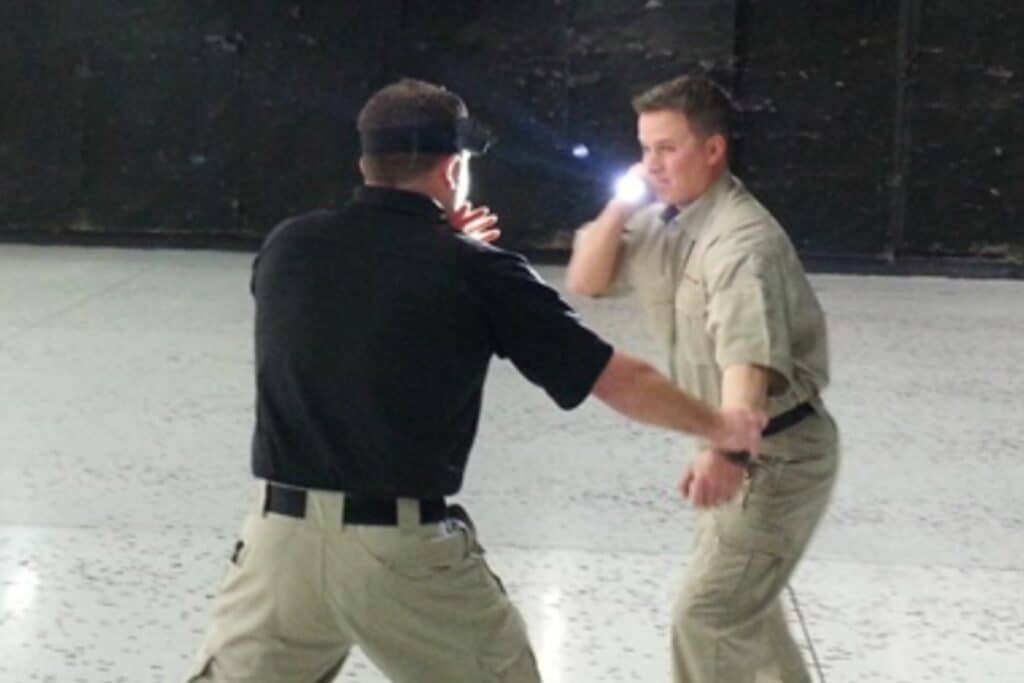
When physical contact becomes unavoidable, simple techniques are easier to remember under stress. At Makhaira, our certified instructors show you how to maintain your balance and show you simple maneuvers for breaking grips, redirecting force, and creating windows to escape. These are survival skills, not fighting skills. A few reliable, low-detail actions practiced regularly are far more effective than a long list of complicated techniques.
Non-Physical Tools and Systems
To be even more prepared, you might consider carrying any of the following non-physical tools:
- Personal Alarms or Whistles: Loud, attention-grabbing devices that startle attackers, draw witnesses, and create opportunities to get away.
- Smartphone Safety Features: SOS shortcuts, location sharing, and dedicated safety apps can alert trusted contacts or authorities quickly.
- Legally Permitted Deterrents (e.g., Pepper Spray, Bright Flashlights): Effective for creating space, but only with proper understanding of limitations, deployment distance, and the law.
- Integration Through Practice: Tools work best when paired with awareness, verbal skills, and simple physical responses.
Training Choices: Building Confidence and Skill
High-quality training is what transforms tools and knowledge into capability. In-person self-defense classes allow for feedback, correction, and realistic scenarios—things videos can’t provide. Seek instructors with credible backgrounds, professional certifications, and a track record of safe, student-centered instruction.
Furthermore, regular practice is essential. Even simple skills fade without repetition. Scenario training, pressure-testing, and refreshers keep your abilities sharp.
Makhaira Group offers responsible, confidence-building classes for non-gun owners or those who do not carry their firearm all the time. Our programs emphasize simplicity, awareness, and practical skills that fit real civilian lifestyles. If you’re ready to build those skills in a supportive, professional environment, contact Makhaira Group today.